Tag: APRN Mary Jean Middleton

  • Understanding Strep Throat: Causes and Contagion

    You wake up with a scratchy throat, and by lunchtime, swallowing feels like navigating a thorny maze. This discomfort is a familiar scenario for many of us, signaling the possibility of strep throat. But what exactly is “strep,” how do you determine if you really have it, and how does it find its way into our lives? 

    Strep throat, which is scientifically known as Streptococcal Pharyngitis, is primarily caused by the Streptococcus bacterium, explains White-Wilson Nurse Practitioner (APRN) Mary Jean Middleton. Among these bacteria, Group A Streptococcus (GAS) takes the spotlight as the culprit behind the majority of strep throat cases. 

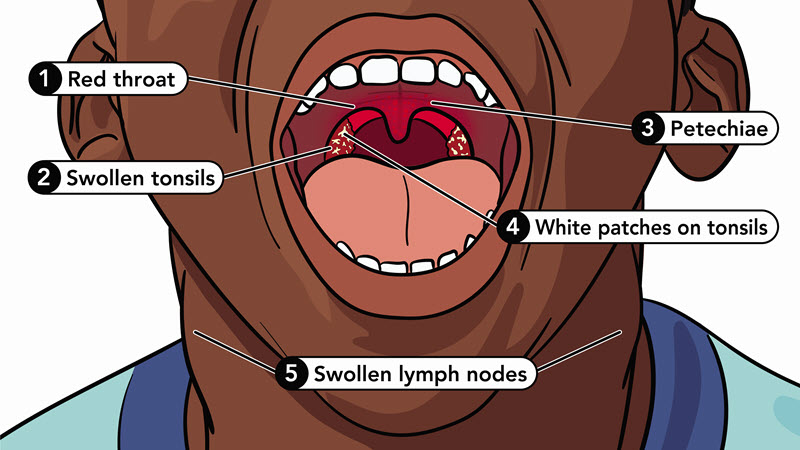
    While we can’t see them with the naked eye, these bacteria are responsible for the unpleasant symptoms of strep, from a sore throat to fever and difficulty swallowing. Other telltale signs of strep are red or swollen tonsils, white patches of pus at the back of the throat and small, red spots on the roof of the mouth. 

    Source: Centers for Disease Control and Prevention
    Although APRN Middleton clarifies that the infection is more common in children than adults, it is still an illness known for a high level of contagion that everyone should be cautious of.  

    “It doesn’t need an elaborate plan to spread; it thrives on close human contact,” says APRN Middleton. “When an infected person coughs or sneezes, they release tiny respiratory droplets that may contain the strep bacteria, and if you happen to be in the vicinity, you could inhale these infectious droplets, leading to a potential infection.” 

    APRN Middleton warns that the bacteria can also linger on surfaces such as doorknobs, keyboards and other objects, so it is important to be extra cautious if you are infected or are around someone who is. Understanding the modes of transmission is key to preventing strep throat, and practicing simple hygiene can go a long way in safeguarding yourself and those around you. 

    Below are some simple steps APRN Middleton suggests patients keep in mind:

    • Handwashing – Regular handwashing with soap and warm water for at least 20 seconds can effectively remove bacteria from your skin. Be especially diligent after coughing, sneezing or touching surfaces in public places.
    • Disinfection – Clean and disinfect commonly touched surfaces in your home and workplace regularly. This can help eliminate any lurking bacteria. 
    • Respiratory Etiquette – Cover your nose and mouth with a tissue or your elbow when you cough or sneeze. Dispose of used tissues properly to prevent the spread of germs. 
    • Avoid Close Contact – If you know someone has strep throat, try to maintain some distance form them until they’ve completed a course of antibiotics. This can significantly reduce the risk of transmission. 

    Should you suspect you have strep throat, APRN Middleton emphasizes it is essential to consult a health care professional for proper diagnosis and treatment. Once diagnosed, strep throat is typically treated with antibiotics, which can effectively clear the infection and reduce the risk of complications, and taking the full course of antibiotics as prescribed is crucial to irradicate the bacteria.

    “If you or someone you know experiences symptoms of strep throat, don’t hesitate to seek medical attention,” says APRN Middleton. “Our Immediate Care team treats strep throat frequently, and we have recently upgraded our equipment to allow us to more quickly process cultures and determine what exactly is causing you discomfort. With a timely diagnosis and appropriate treatment, you can recover quickly and minimize the risk of spreading the infection to others.” 


    Mary Jane Middleton, APRN is a registered nurse practitioner with White-Wilson Medical Center’s Immediate Care team. She is passionate about listening and allowing the patient to fully express what brings them in before drawing conclusions. Learn more about APRN Middleton and her approach to patient care here. 

  • Women’s Wellness: The Importance of Self-Care

    For many women in their 20s, 30s and 40s, life is very demanding. Between working, caring for children and older family members, and tending to household needs, there seems to be little time for much else. When you are always focused on helping others, it quickly becomes easy to neglect your personal well-being. 

    “Women frequently disregard their own health for long periods of time because they tend to put others first such as their spouse, children, parents and friends,” says White-Wilson Advance Practice Registered Nurse (APRN) Mary Jean Middleton. “While proactively caring for yourself does consume precious time and energy, it is important to understand the benefits and how prioritizing your own needs can help you in the long-term.”

    Women at every age are faced with a multitude of life changes and challenges, both of which can be positive and negative, explains APRN Middleton. The status of parenting, family roles, metabolism, work, interpersonal relationships and hormones all fluctuate throughout a women’s life, and ignoring the body’s needs can often lead to heightened levels of stress or depression, as well as cause more serious health issues down the road.

    “Self-care looks different for everyone,” says Middleton. “For example, I have young children and work full-time, so taking a break with a paperback book or playing with my dog allows me some quiet time to myself and an opportunity to take stock of my physical and mental well-being. Making time for those activities helps me decompress and recharge so that I am ready to face whatever life throws my way next.”

    The benefits of maintaining your physical and mental wellness can include decreasing the risk of anxiety and depression, improving sleep, bolstering brain health and cognitive function, and benefiting the overall quality of life, elaborates APRN Middleton. Finding what works best for you and then sticking with it will help you discover and fulfill your unique needs.  

    Here are some simple examples of how you can include self-care in your day-to-day life:

    • Get moving. Walking, practicing yoga or playing a game can bolster heart health and decrease blood pressure levels.  Strive to get 30 minutes of moderate to intense exercise per day. This can be something as simple as a brisk walk. 
    • Read a book. Taking a break from your phone or computer screen can increase productivity, learning and awareness.  
    • Take a bath. Soaking in warm water before bed can elevate your mood and help you sleep better.
    • Get an annual check-up. An annual wellness exam is a time to address changes in your body and catch potential issues early. Putting these off will only lead to more stress and possibly more issues later. 

    APRN Middleton emphasizes that you should not underestimate the power of self-care. Always give yourself priority when divvying up your time and energy because doing so will ultimately strengthen your capacity to focus on those around you. Be sure to visit your primary care provider to receive your annual wellness exam as well as talk through any questions or concerns you may have about your overall health and wellness. 


    Mary Jean Middleton, APRN provides comprehensive care at White-Wilson Medical Center in Destin. She works with patients to treat and manage a wide range of urgent health conditions and offers same day appointments. Learn more about APRN Middleton and her approach to patient care here. 

  • Myth Busters: Monkeypox is the Next COVID-19

    Just as it seems like we are transitioning back to (a new) normal after the height of of COVID-19,  another illness is beginning to cause concern.

    Monkeypox is a rare disease caused by an infection with the monkeypox virus and is similar to smallpox. Beginning in January 2022, the United States, as well as many other countries around the world where monkeypox has not historically been reported, have been experiencing an outbreak of the disease. Understandably, this increase in numbers, as well as news coverage of the disease, has many wondering: Is this the next COVID-19?

    “There are many things that set COVID-19 and monkeypox apart,” explains White-Wilson Immediate Care Nurse Practitioner Mary Jean Middleton. “First and foremost, monkeypox has been around for decades whereas COVID-19 was a novel virus, first seen in late 2019. Therefore, we have significantly more research on monkeypox available to us than we did in 2020 for COVID-19”

    According to the CDC, monkeypox was first discovered in animals in 1958 and the first recorded human case occurred in 1970. Until recently, the majority of monkeypox cases were found in central and western Africa. Occasional cases were found in travelers who had been to countries where the disease usually occurs or in imported livestock, but the transmission was generally minimal.

    “One of the hardest parts of fighting COVID-19 was the fact that we knew little about it,” says APRN Middleton. “We had to quickly learn how it spread, how to prevent it and if it could be cured before we could really make any headway against it. With monkeypox, we have decades of experience and research to work off.”

    Like COVID-19, monkeypox can occur in patients of all ages and can be spread through respiratory droplets and bodily fluids as well as physical contact with infected people and items. However, the duration of the contact and exposure to respiratory droplets plays a role in the spread of monkeypox.

    “The current data shows that for monkeypox to spread from one person to another, there must be direct, prolonged exposure to respiratory secretions and bodily fluids,” say APRN Middleton. “That means you have to be in extremely close proximity to the person for a while, such as is the case with intimate contact or physical affection. A cursory pass by a person is not going to infect you nor is being in their presence for a few minutes. This is why the majority of the monkeypox cases we see are the result of close contact, like that between intimate partners. That’s a big difference from COVID, where the virus was spread unknowingly during quick interactions or in public spaces.,” she continues. “Add in the fact that only symptomatic people can spread the virus and infections are visible to those who are infected and to others, and you can see while it is much easier to get COVID-19 than monkeypox.”

    A person with monkeypox can spread it to others from the time symptoms start until the rash has fully healed and a fresh layer of skin has formed. The illness typically lasts 2-4 weeks.

    Signs and symptoms of monkeypox as well as pictures of monkeypox rashes can be viewed on the CDC website. Perhaps one of the biggest differences between the two diseases lies in the availability of vaccines.

     “As I am sure we all remember, COVID-19 vaccines didn’t even exist until late 2020,” she says, “with most people unable to receive them until Spring of 2021 through FDA emergency-use authorizations. For monkeypox, there are two current vaccines with full FDA approval that have been on the market since the 2010s. So, we are able to get ahead of this before it gets bad like in the case of COVID-19.”

    While monkeypox vaccine eligibility is determined by each state’s department of health, most recommend a monkeypox vaccine for people who have been exposed to monkeypox or who may be more likely to get monkeypox, including:

    • People who have been identified by public health officials as a contact of someone with monkeypox.
    • People who know one of their sexual partners in the past two weeks has been diagnosed with monkeypox.
    • People who have had multiple sexual partners in the past two weeks in an area with known monkeypox transmission.

    “To sum everything up, I understand why people would be concerned with an outbreak of monkeypox following so closely behind COVID-19,” concludes APRN Middleton, “but you really don’t have much to worry about. We, as a country, are so much more prepared to fight monkeypox than we were with COVID-19, in part because of the lessons we learned over the past three years.”

    As always, if you have any concerns about your risk for monkeypox or think you may have been exposed, we at White-Wilson Medical Center are ready to help you through.”

    This Myth Is Busted!

    Mary Jean Middleton, APRN is a registered Nurse Practitioner caring for patients at the White-Wilson Immediate Care and Family Medicine clinics in Destin, Florida. Learn more about her approach to patient care here.