Category: Health

  • Tips for a Better School Year

    S059QDGBOGAs families prepare for a new school year, keeping children in the classroom and out of the nurse’s office is a top priority. Dr. Evan Meeks, a pediatrician at White-Wilson Medical Center’s Niceville Clinic, offers 10 tips for a happy, healthy, and successful school year!

    1. Get back into a school routine. Set a bedtime and wake time schedule, and stick to it. Children need 8-10 hours of sleep per night.
    2. Plan for sick days. Discuss with your health care provider your concerns and plan for medical issues that may arise during the year.
    3. Schedule a checkup. An annual checkup helps monitor your school-aged child’s growth and development.
    4. Be sure eye glasses and contact lenses are up-to-date, before classes start. Consider having a spare pair to avoid missed school due to mishaps.
    5. Wash your hands. Discuss with children the importance of hand washing, and lead by example. Show them that washing hands before and after eating or visiting the bathroom is smart.
    6. Arm your entire family with a flu vaccine. Children should begin receiving the vaccine at 6 months of age.
    7. Learn to control asthma. Asthma causes much of the missed school and work in our community. Consider attending one of our Asthma Group Appointment Project (AGAP) sessions to learn to control flare ups.
    8. Take a vitamin. An age-appropriate multivitamin will provide you with all you the supplemental vitamins you need.
    9. Put it on your calendar. Being organized and prepared for a busy school year can help relieve stress. Families need to carve out time for what is important – work, play, sports, exercise, rest, holidays and fishing!
    10. Create a launchpad designated for homework, backpacks and sports equipment. Nothing is worse than doing your homework and forgetting it at home.

    Dr. Meeks is an American Board of Pediatrics certified physician currently accepting new patients. He leads AGAP sessions in Niceville and Fort Walton Beach each month. Sessions are open to asthmatic adults, children and caregivers and you do not have to be a White-Wilson patient to enroll. Participants receive an Asthma Control Test™ and assessment, participate in group discussion and create an asthma action plan.

    To schedule an appointment with Dr. Meeks or other White-Wilson providers, call 850.863.8100. For a complete list of providers, visit www.white-wilson.com.


  • Beat the August Heat

    As residents of the sunshine state, we bypass extreme temperatures all winter long; however, it is important to be aware that extreme summer temperatures are dangerous. According to the Center for Disease Control and Prevention (CDC), an average of more than 600 people die from complications related to extreme heat each year.

    Processed with VSCOcam with m6 preset

    As summer temperatures remain high through August, so does the risk for heat-related illness. Current forecasts predict temperatures remaining in the 80s and 90s, offering little relief for locals. It is important to know the signs and symptoms of heat exhaustion and heat stroke so that you can respond quickly in an emergency.

    “Extreme heat can pose very serious health risks,” said White-Wilson Medical Center Family Medicine Physician, Dr. Christopher Hansen. “Signs of heat exhaustion include muscle cramping, heavy sweating, vomiting or fainting, and heat stroke signs include a body temperature above 103°F, lack of sweat, dry skin, rapid pulse or unconsciousness.”

    Dr. Hansen recommends that you move indoors to air-conditioning and seek medical attention immediately if you experience any symptoms of heat-related illness.

    These steps can help you beat the heat this summer:

    • Stay in an indoor air-conditioned location as much as possible. Air conditioning is the number one factor against heat-related illness and death, according to the CDC.
    • Drink more water than usual, and avoid sugary drinks and alcohol. Do not wait until you are thirsty to drink water.
    • WaterAvoid heat exposure during the hottest hours of the day, usually 10 a.m. – 4 p.m. Those who work outdoors should adjust their workday to limit over exposure during these hours.

    • Wear light colored and loose fitting clothing that covers your arms and legs.
    • Don’t forget your wide-brimmed hat and sunscreen.
    • Pace your physical activity, starting slow.
    • Stay informed of local weather and extreme heat warnings.
    • Take a cool shower or bath to cool down.
    • Never leave children or pets in cars.
    • Know the signs of heat exhaustion and heat stroke, and respond quickly in an emergency.

    “Heat-related illnesses are serious, but something we can avoid by using caution. Young children, the elderly and people with chronic disease or mental illness are at the highest risk for heat-related illness,” said Dr. Hansen. “It is important to be aware of the symptoms of heat-related illness and closely monitor the people that are dependent on you for their care.”

    Dr. Christopher Hansen is certified by the American Board of Family Medicine and is currently accepting new patients at the White-Wilson Family Medicine Clinic in Fort Walton Beach. White-Wilson offers Family Medicine Clinics in Destin, Fort Walton Beach, Navarre and Niceville. For more information on White-Wilson Family Medicine providers or to schedule an appointment, call 850.863.6600 or visit www.white-wilson.com.

  • Keeping Blood Pressure in Check

    Have you checked your blood pressure lately?

    Uncontrolled high blood pressure increases your risk of heart disease, the nation’s #1 cause of death.

    Also known as hypertension, high blood pressure is one of the most common medical conditions Americans experience and a major contributor to heart attacks and stroke.

    So, what exactly is blood pressure? Blood pressure is determined by the amount of blood your heart pumps and how blood flows through your arteries. The more blood your heart pumps and the narrower your arteries, the higher your blood pressure.

    People with hypertension commonly have no symptoms, so screening is essential. The American Heart Association recommends that adults get screened for hypertension at least once every two years.

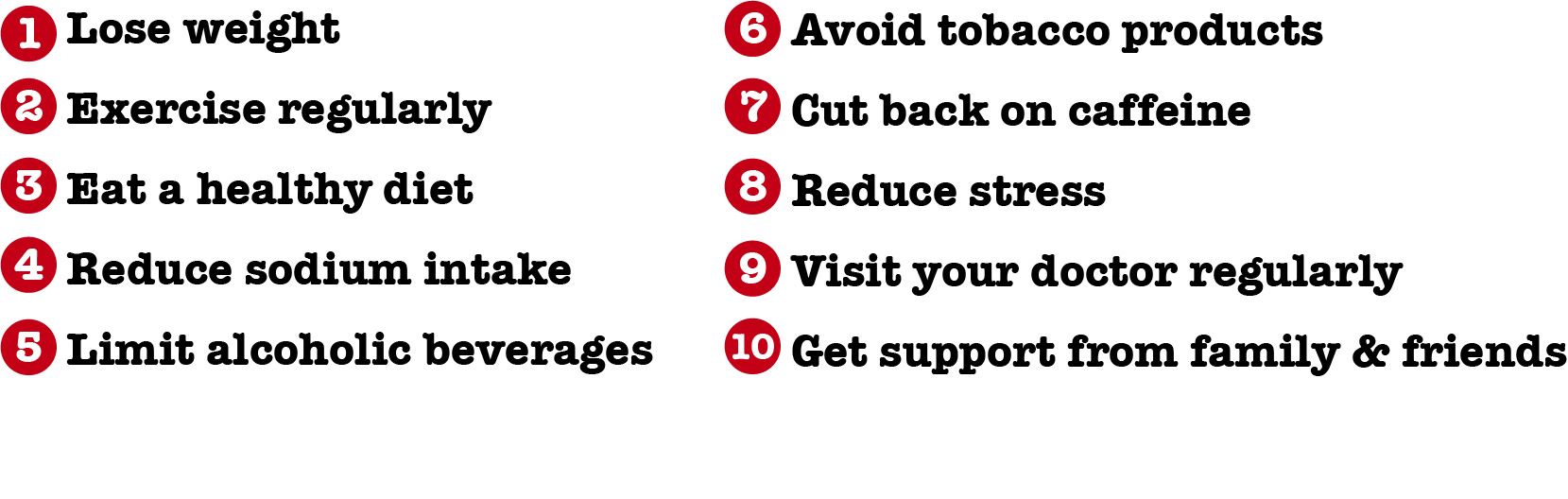
    Hypertension risk factors are usually external and include obesity, drinking too much alcohol, smoking, and stress. This means most adults can easily prevent and control high blood pressure on their own. The Mayo Clinic recommends these simple steps to prevent hypertension:

    Blog - Blood PressureVisit your family doctor once a year to discuss your risk of hypertension, and manage your overall health and wellness. White-Wilson offers primary care doctors in Fort Walton Beach, Destin, Navarre and Niceville. To find a primary care doctor or cardiologist, click here.

  • Heart Attack and Stroke

    Know the signs before it’s too late!

    heart_rate_graphic

    Heart disease is the nation’s #1 killer of men and women. Each year we recognize February as Heart Month! It’s a great time to raise awareness about heart disease and work to prevent the 1.5 million heart attacks and strokes that take place in the United States this year.

    Heart attacks and strokes are life-threatening emergencies, meaning every second counts! It is important to know the signs of each and act quickly.

    Heart attack warning signs include:

    • Chest discomfort – it hurts or feels squeezed
    • Discomfort in other areas of the upper body, such as arms, back, shoulders, neck or jaw
    • Shortness of breath
    • Other signs may include cold sweat, nausea, or feeling light-headed or tired
    • Stroke is currently the fourth leading cause of death in the U.S.
    • Stroke can affect anyone, but the risk increases as you get older.

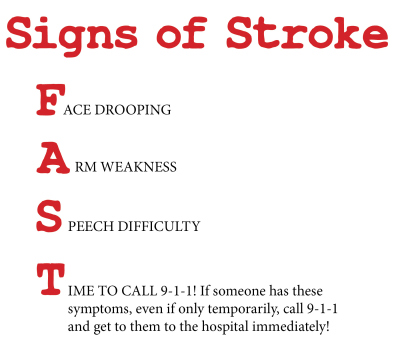
    F.A.S.T. is an easy way to remember the sudden signs of stroke. If you spot these signs, you’ll know that you need to call 9-1-1 right away:

    fast-stroke-signs

    About 7 million people who have had strokes are alive today, thanks to education and preventive care.

    For more info on heart attacks and strokes and ways you can recognize the signs, visit the American Heart Association.